Finding your ideal data integration platform can feel daunting. There's a wide range of vendors to choose from, and not all will be the right fit for your requirements. These questions will help you select the right software, and, perhaps more importantly, the right partner.
Knowing how to choose data integration software comes down to taking a holistic view of the features, pricing, support, and technical fit, going beyond the initial sales pitch to understand what actually determines success once the contract is signed.
In this article, we'll be covering the 12 questions that matter most when you’re evaluating data integration software, from defining your requirements through budget, vendor selection, trials, and implementation, plus one question that's only become relevant recently: whether the vendor will still be there in a few years.
Key Takeaways
-
Choosing data integration software is really two decisions at once: the right product, and the right long-term partner.
-
Vendor stability is now a legitimate evaluation point, not just features and price, given the recent wave of industry consolidation.
-
The most expensive mistakes usually come from underestimating the last 10% of a problem, the edge cases a "one-size-fits-all" platform can't handle.
-
Pricing models vary significantly. Some vendors charge by data volume or usage, others by a fixed combination of users and processing capacity.
-
A full, hands-on trial, not a generic demo, is the only reliable way to know if a platform fits your requirements.
- Implementation doesn't end at go-live. Cultural adoption and ongoing vendor support are just as important as the initial technical fit.
12 essential questions to ask when choosing data integration software
Choosing data integration software means weighing features, price, and support against your specific requirements, but a few questions are essential for you to form a reliable long-term decision.
Here are the 12 key questions that determine whether a platform will work for your business:
1. What will you use the software for?
First, you need to ask what you're trying to achieve with your data integration software. Why does your business need data integration? Is it for a one-off project or an ongoing one?
Is your priority:
-
Ingesting data from other sources
-
Getting data in and out of a data warehouse
-
Supporting digital transformation
A useful exercise is future retrospection. Imagine yourself at the end of a successful rollout. What did you achieve? What can you do now that wasn't possible before? What went well, and how did you avoid the pitfalls? Brainstorm this with your colleagues and get their input.
Another helpful requirement-setting exercise uses the MoSCoW method: Must have, Should have, Could have, and Won’t have. It's a helpful way of sorting essential requirements from potentially distracting nice to haves, and it focuses your pre-sales analysis on the features and functionality that really matter.
Being really clear about what a successful deployment looks like for you will help your buying process enormously.
2. Where is your data?
Where your data sits has a big influence on the software you choose, and the decision will also depend greatly on the number, type, and nature of the data sources you're looking to connect.
Are you working with a single, giant database, or multiple data sources globally that all need to be unified? Are you moving data to the cloud from in-house systems?
Make sure you ask how this could affect your security, control, and agility over the years. Complex problems don't need complex solutions, they need effective ones.
3. Can the platform solve 100% of the problem?
It's an old software development rule that the first 90% of a project takes up 10% of the time, and the last 10% takes the other 90% of the time. It's often the same for data integration. You need a tool that solves the whole process, not just the easy bits.
That last 10% might not seem like much proportionally, but it can cause more than its fair share of grief if not handled properly. If your provider has a one-size-fits-all product, their platform will likely be limited to a standardized, cookie cutter approach. Can the solution you're considering be customized to handle those difficulties? CloverDX combines code and visual design and integrates with other systems and processes to make it possible to solve the last 10% of the job in one place, rather than needing another third-party tool to hook everything together.
Challenges often include dealing with errors and exceptions, reporting, coping with peak workloads, security and privacy, troubleshooting, and maintenance. A data platform needs to work for your entire journey, not just the start.
Apply a practical stress test to your potential platform. What happens if a process your company runs each morning suddenly grinds to a halt? Will it need a team of people to fix the issue, or will you have the means to troubleshoot as problems arise?
4. What are your future data needs?
Make sure that any data integration platform you evaluate is flexible enough to support your existing and future data sources and destinations. Is there likely to be a change in the volume of data you need to process, or the number of sources you'll need to connect? Are you going to need faster data processing?
Planning on building a data warehouse or a data lake? This webinar on how to build a modern data warehouse covers this in more detail. It's important to make sure you can be flexible as your business processes and data needs evolve, and that your potential solution can scale with your business.
5. Does it increase collaboration between teams?
Consider your non-technical users. They might not have the technical capabilities to manage raw data, but access to reliable data can be crucial for them to do their jobs. Does the platform make accurate, usable data available to those business users, without them needing to rely on IT teams?
Does the platform have the ability to curate and publish live datasets in a data catalog accessible to non-technical users? The last 20 to 30 years have seen fewer gatekeepers and bottlenecks in the data landscape. Tasks that once needed specialist developers can now be handled in-house, closer to the end user. This is data democratization in action, and it can empower your business through greater collaboration.
Data specialists should be able to manage and curate datasets, while business users can easily access and use the data without needing specialist skills. Ask your prospective provider who in your business will be empowered by their solution. Is it focused exclusively on technical users, or will it benefit everybody?
6. Who will be working with your data integration software?
Who will be working with the software, business teams or IT teams, or both? Who will implement and support it? Consider how much self-service your organization is willing to take on and evaluate the resources you have available to manage the software in-house. Who will maintain it, and what will they need access to within the system to keep it running smoothly? Where will they get training, advice, and support?
7. Will you get the support you need to guarantee success?
Data integration is a team effort. You shouldn't have to do it alone, so the support you get from a vendor is a critical success factor. Ask the vendor if support is available 24/7, or only during standard working hours? Is support included in the price, or is it extra? Similarly, training and consultancy? Will you have access to real people and product expertise, or will you be outsourced to a third party? Are software upgrades regular, reliable, and consistent? Does the vendor have online communities, FAQs, and other means of support?
We've found that most CloverDX customers use our support or professional services, whether it's our specialized courses or professional services. It's why ongoing support is core to our promise to all customers. Above all, make sure your provider cares about your success, not just about closing the deal.
"I can't even convey how much of my time is spent following up with vendors who would happily do nothing if not incessantly prompted for status updates. That is never an issue with CloverDX's team. They are the only one that I can give a list of requirements to and simply walk away from. I know that they will always follow through within the agreed time and with a solution built in their product that is so brilliant."
- Data and Analytics Manager, Healthcare and Biotech (Gartner Peer Insights review)
8. What's your budget?
Realistically, how much are you willing to invest in your data integration software? Acquiring software doesn't just incur license costs, you'll need to evaluate the cost of developers or consultants, maintenance and support, and product upgrades. It might seem attractive to go with a big-name vendor, but that can often be hugely expensive, so make sure the product and service are really what you need. Equally, don't cut corners with a vendor that's cheaper initially but lacks the functionality, reliability, or depth of support you need.
The way you're charged matters too. Some vendors follow a SaaS model of charging based on consumption, by the number of runs or the volume of data processed, which can make costs hard to predict as they flex with usage and business growth, plus the number of connectors you may need to add. Others, like CloverDX, charge based on a combination of users and processing capacity, measured by CPUs in use. See our pricing page for more on our approach.
9. Have you had a trial and demo with various vendors?
Download a trial from each shortlisted vendor so you can compare and evaluate their product, service, and company, and how much investment is required in time, cost, manpower, and training.
Make sure you're trialing the full product, not something with restricted features, and take the time to implement part of your solution rather than just exploring the interface. Ask for a demo tailored to your specific use case, not a generic walkthrough, ideally using your own test data.
Don't ignore your gut feelings during this process. Does the company seem likely to value your business? Has it responded promptly when you needed it? Are there nagging doubts that the vendor might forget you once the order is signed? And don't be afraid to acknowledge when a solution isn't right for you, a good vendor should be clear about what their solution can offer, as well as what caveats to expect, rather than pushing you toward a deal that doesn't fit.
Book a personalized demo to see this in practice.
10. How do you identify the right vendor?
Different data integration vendors have different strengths and will give you different experiences. Do you value close business relationships and personalized service? Then make sure you choose a vendor that offers that. Be realistic about the support you're likely to need, both during implementation and ongoing, and check that your potential vendor's offering matches your expectations. Ask to speak to some of their existing clients to get a feel for their operations and culture.
It's also worth factoring in vendor stability. A significant wave of industry consolidation has made this a legitimate evaluation point alongside features and pricing. Recent acquisitions and mergers among major data integration vendors mean a platform's roadmap, pricing, and support can all change significantly overnight. Ask any vendor you're evaluating directly about their ownership structure and any pending changes, not just their product roadmap.
Third-party, vendor-neutral comparisons can help here too. Vendor neutral ETL and data integration vendor guides are a good place to get external advice on the specialized vendors well-suited to specific industries or specialized data integration needs, the kind of independent recognition worth checking for beyond a vendor's own marketing claims.
11. How will implementation and ongoing support work?
Implementing data integration initiatives doesn't always run smoothly, and there will likely be a few hiccups along the way, despite your best planning. Make sure your vendor can fully validate their processes and turnaround times on critical issues, provide adequate support and documentation, and train your team properly.
A good supplier will help design your data architecture and provide consultancy services if required. Set clear goals and expectations and establish KPIs so you can measure success for later evaluation.
Don't be surprised if you encounter resistance from people used to doing things differently, for example, from your dev teams accustomed to building everything from scratch with scripts and SQL. Try to maintain a balance between efficiency and transparency throughout this process.
Better data integration can pave the way for future innovation, not to mention freeing up people from repetitive data tasks to more valuable work. Don't be afraid to ask your vendor for advice, they're the experts, and a long-term relationship can help you keep getting more out of new features as your organization's needs evolve.
How Ortec Finance reduced repetitive manual data processes by up to 90% with CloverDX
“We are quite technical in our team, but sometimes you just don’t know the CloverDX specifics. What’s the industry standard way of doing something? What’s the smart way to do it? To address these questions we used CloverDX’s expert on demand during the implementation process. We found it really valuable to be able to speak to someone who has a lot of experience and have them either confirm your thinking or point you in a new direction”
- Thomas Hage, Senior Consultant at Ortec Finance
12. Will the software save you time and effort?
In the world of data, we often hear abstract terms like value and efficiency, which are relevant but fail to convey in clear language exactly what benefits you can expect. The key is identifying the pain points and bottlenecks in your internal processes.
Are your developers wasting time on low-level, repetitive tasks when their energy could be more impactful elsewhere? Is stability an issue, resulting in constant crashes that cost time and energy to fix? Are you struggling to maintain legacy code and ad hoc integrations?
More and more businesses are adopting automation, recognizing the positive changes it can bring to their workflow. If a data task is repeatable it can be automated, sparing your team the tedium of performing the same jobs, even complex workflows, over and over. Ask any prospective provider plainly if the solution they’re providing will let you push a button and move on to the next task without worry. Can the platform help reduce the gigantic workload the team currently carries on their shoulders?
Every business will occasionally collect bad data, of course, but an automation solution should let you implement mechanisms that handle most validations and checks while delivering instant notifications if any problems arise.
Over time, your data should require less hands-on attention and become more dynamic and useful as part of the bargain. If a provider can't promise that they're likely not the right fit for you.
Final Thoughts: Choosing a Partner, Not Just a Platform
Only you can decide which data integration provider will best suit your business, and to some extent, this comes down to culture and philosophy as much as features.
If a vendor can't clearly answer the questions above, is that provider ready to tailor their platform to your use case? If problems arise, will they be ready, willing, and able to help? That's really how to choose data integration software that lasts, by posing these 12 questions you're not just narrowing down the field, you're equipping yourself with the information to choose a solution that meets your organization's needs now and in the future.
The right data integration software is really the right long-term partner. Let's talk about what that could look like for you and your team, or book a personalized demo to see it in action.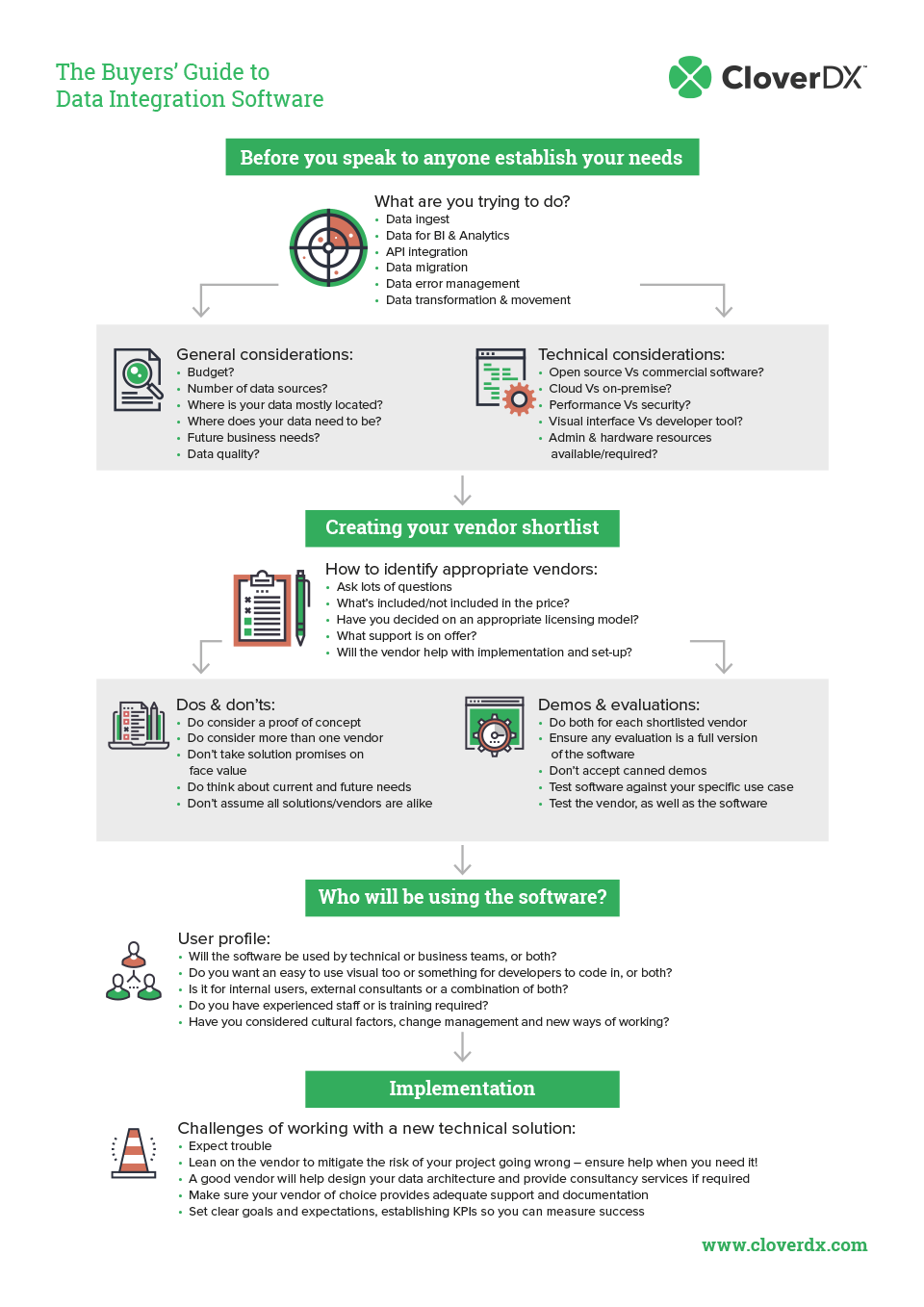

Share