Data democratization gets talked about constantly, and defined precisely far less often. Most organizations agree it matters, but far fewer have a clear, working sense of what it requires beyond "give people more access to data."
That gap has real consequences. Get the definition wrong, and you either end up giving everyone unrestricted access to everything, which creates its own governance and trust problems, or you stay so cautious that nothing changes and data stays locked in the same silos it always has.
In this article, we'll be covering what data democratization means, how it relates to governance and data literacy, and how AI is changing what's possible, while pointing you toward a dedicated practical guide when you're ready to implement it.
Key takeaways
-
Data democratization is the ongoing process of making data accessible and understandable to everyone in an organization, not a one-time project you switch on and consider finished.
-
Nearly 60% of executives say their teams lack the data literacy required for effective self-service, which is why tools alone don't achieve democratization without a genuine culture shift.
-
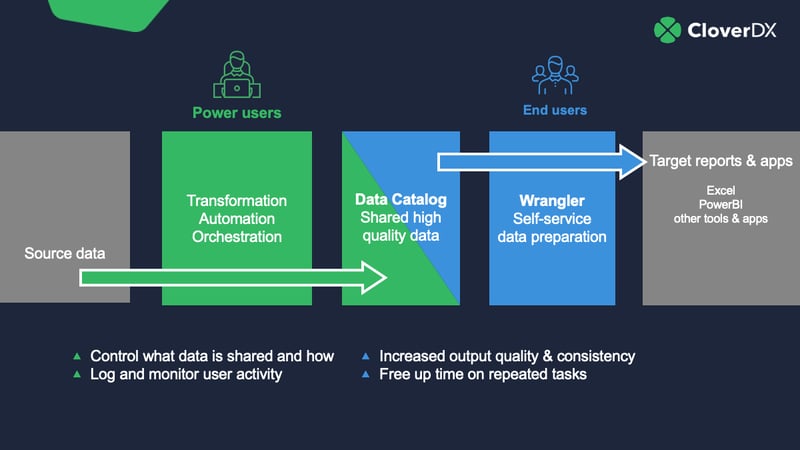
Democratization isn't the opposite of governance, the two work together: IT retains control over source data while business users get safe, self-service access to trusted, validated versions of it.
-
AI-driven discovery tools are changing what's possible, helping non-technical users find and understand relevant data faster, without replacing the governance and trust work underneath it.
-
A data catalog acts as the practical bridge between raw source systems and business users, making data searchable and understandable without requiring users to learn the underlying systems.
-
Democratization works best starting small, with a handful of frequently requested datasets, rather than attempting to expose an entire organization's data at once.
What is data democratization?
Data democratization can be a loaded term, a lot of people talk about it, but not everyone takes it to mean the same thing.
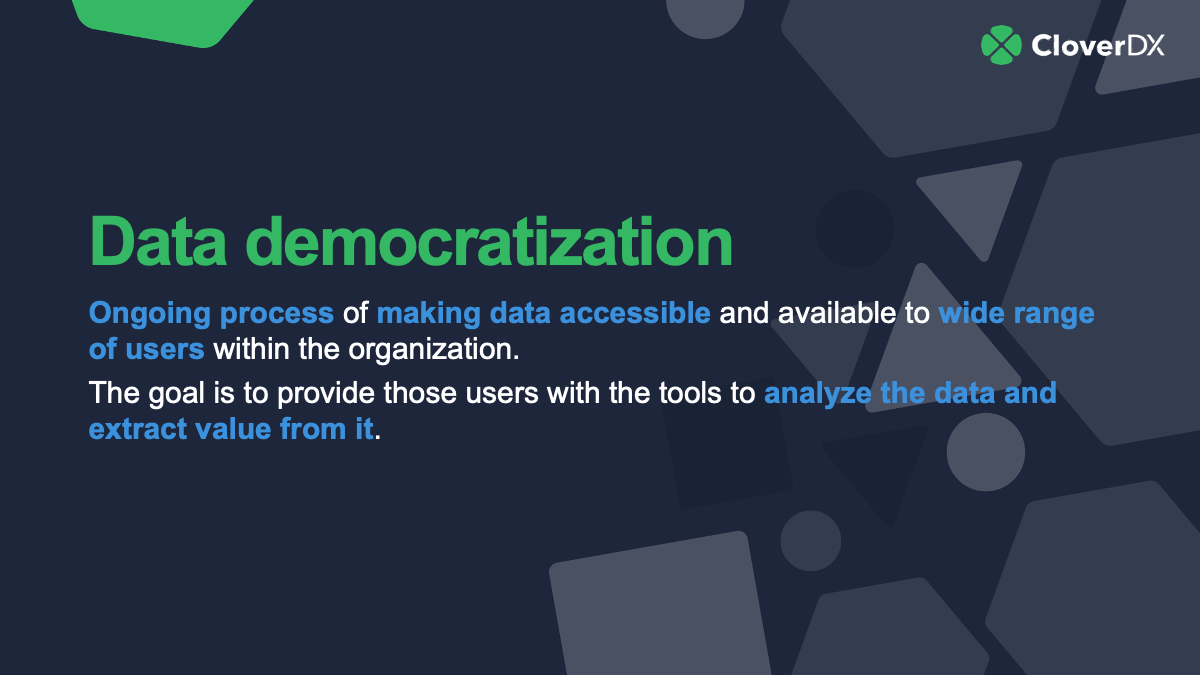
If we ask Google, we learn that data democratization is an ongoing process of making data accessible and available to a wide range of users, with the goal of providing them with the tools to analyze the data and extract value.
Many organizations today are collecting vast amounts of data, but there's not always an easy way for people to work with it. The goal of data democratization is to improve that, because as you get more people working with data, you get better value out of it. More people thinking about how to use data effectively means more people making their jobs better and getting better results.
The data democratization process is not a 'big bang,' something you switch on overnight and then it's done. Partly because your data itself is ongoing, new data comes online, new capabilities are needed, and so on. And partly because it comes down to building a data democratization culture.
Giving everyone a login to your data warehouse is not enough, that's not going to help them. You need to build a culture around using and exploring data. People used to working with single applications might not be that effective when they suddenly get data from 200 applications. And that's not even mentioning the difficulties in just giving everyone access to everything. Regulations, security, and relevance all mean you have to think about what data is useful, and for who.
Data literacy: The dependency most strategies overlook
Giving people access to data isn't the same as giving them the ability to use it well, and that gap is called data literacy.
This isn't a minor issue at the margins. Nearly 60% of executives say their own teams lack the data literacy required for effective self-service, according to recent industry research. That's the majority of organizations trying to democratize data without having solved the more fundamental problem of whether people know what to do with it once they have it.
This is exactly why tools alone don't achieve democratization. A team can roll out the best self-service platform available and still see low adoption, or worse, confident misuse, if nobody's invested in building comfort and confidence working with data across the organization. Literacy isn't a prerequisite you solve once either, it needs the same ongoing attention as the technical side of the rollout.
In practice, this means literacy work needs to happen alongside, not before, giving people access. Waiting until everyone is fully trained before opening anything up delays the whole initiative indefinitely, since literacy itself is best built through hands-on exposure to real data, not a training module completed in isolation. The organizations that get this right treat literacy as a rolling investment that scales with adoption, not a one-time onboarding checkbox.
Read more about the data democratization features of CloverDXAccessible data vs silos
Traditional data structures keep data in silos. Think of a CRM or ERP system that only people in certain departments have access to. There could be dozens or even hundreds of systems built for a specific purpose.
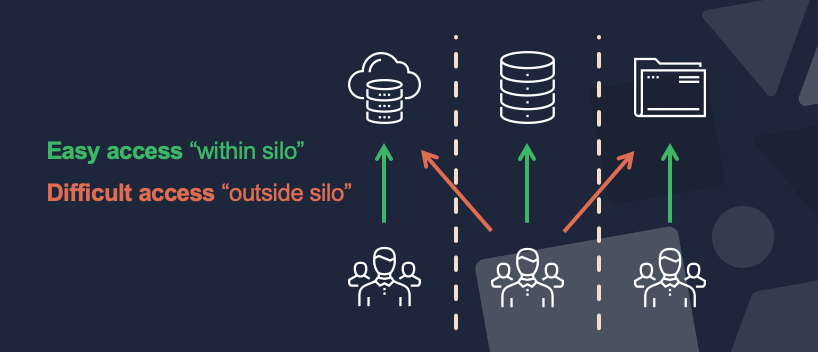
Going outside of the silo is difficult. Data you don't have access to is invisible to you, and you have to know what to ask for. Often this means long discussions about what is even available and how to get the data to you, and these discussions often end up with security concerns.
But even if you overcome these concerns, giving access isn’t that simple. You could just give everyone an account in that app, right? But that can just make things worse. People now have access, but they often don’t understand what they’re looking at. Users just want to be able to work with the data, they don’t want to have to learn how hundreds of applications work, or what the data model is.
One way of handling this is a data catalog, something between applications and users. A data catalog is a layer that gives access to certain users to certain data and that helps users understand what is in the data and how to use it, without having to log into an unfamiliar system and UI.
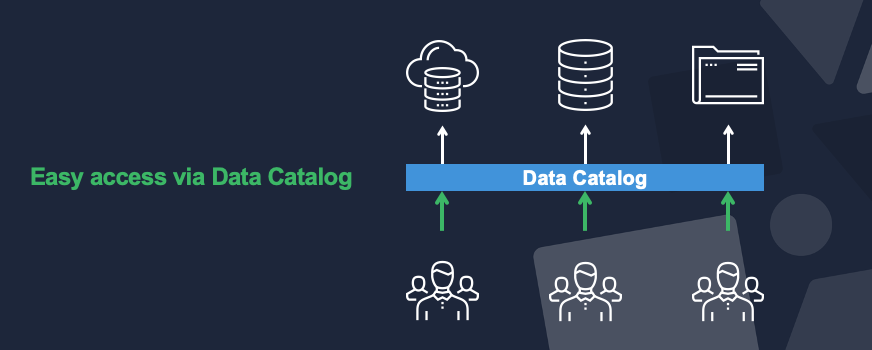
The same challenge applies, in a different form, if your data already sits in a warehouse or lake rather than scattered applications. Consolidating data into one place solves the silo problem technically, but it doesn't automatically solve the understanding problem, not everyone is comfortable writing a query against a warehouse, and a data lake with no organizing layer on top of it just becomes a bigger, harder-to-navigate silo of its own.
How AI is changing data democratization
AI-driven discovery tools are changing what self-service data access looks like.
Rather than relying purely on a static, browsable catalog, AI copilots increasingly automate data discovery and recommendation, helping non-technical users find the right dataset through natural language search rather than needing to know the exact name of what they're looking for. This lowers the literacy bar for the discovery step specifically, even if it doesn't remove the need for literacy in interpreting what's found.
This connects to a related, current framing worth knowing: treating datasets as "data products", reusable, governed, and documented well enough that they can be discovered and trusted by someone who didn't build them, rather than one-off exports built for a single request. A data catalog, the concept covered above, is the practical foundation this depends on, AI-driven discovery makes that foundation faster to search, but it doesn't replace the underlying governance work of making the data trustworthy in the first place.
It's worth being precise about what this changes and what it doesn't. AI can shorten the path from "I need some data about X" to "here's the dataset that answers that," which is a real, meaningful improvement over hunting through a catalog manually. What it doesn't do is verify that the person asking understands what they're looking at once they have it, that's still a literacy question, and still an organizational one, not a product feature.
Collaborate to build it better
Implementing data democratization well requires collaboration between the people who want data, the people who own it, and IT in the middle making it happen. The most effective organizations start small, publishing a handful of frequently requested datasets first, rather than attempting to expose everything at once. Read the full step-by-step approach to building this collaboration in practice, in this guide to implementing data democratization.
Trusted data
As the team responsible for publishing data, you also need to be responsible for publishing quality data that can be trusted, cleansed and validated at the source, rather than left for every user to figure out on their own. This implementation guide covers the practical detail of how this gets built into a working process.

You as the data provider need to understand what users need the data for, so you can tailor it for them, even if it means creating different versions of the data for different users. If you have an index that’s searchable people can always find the version of the dataset that has the columns they need and so on.
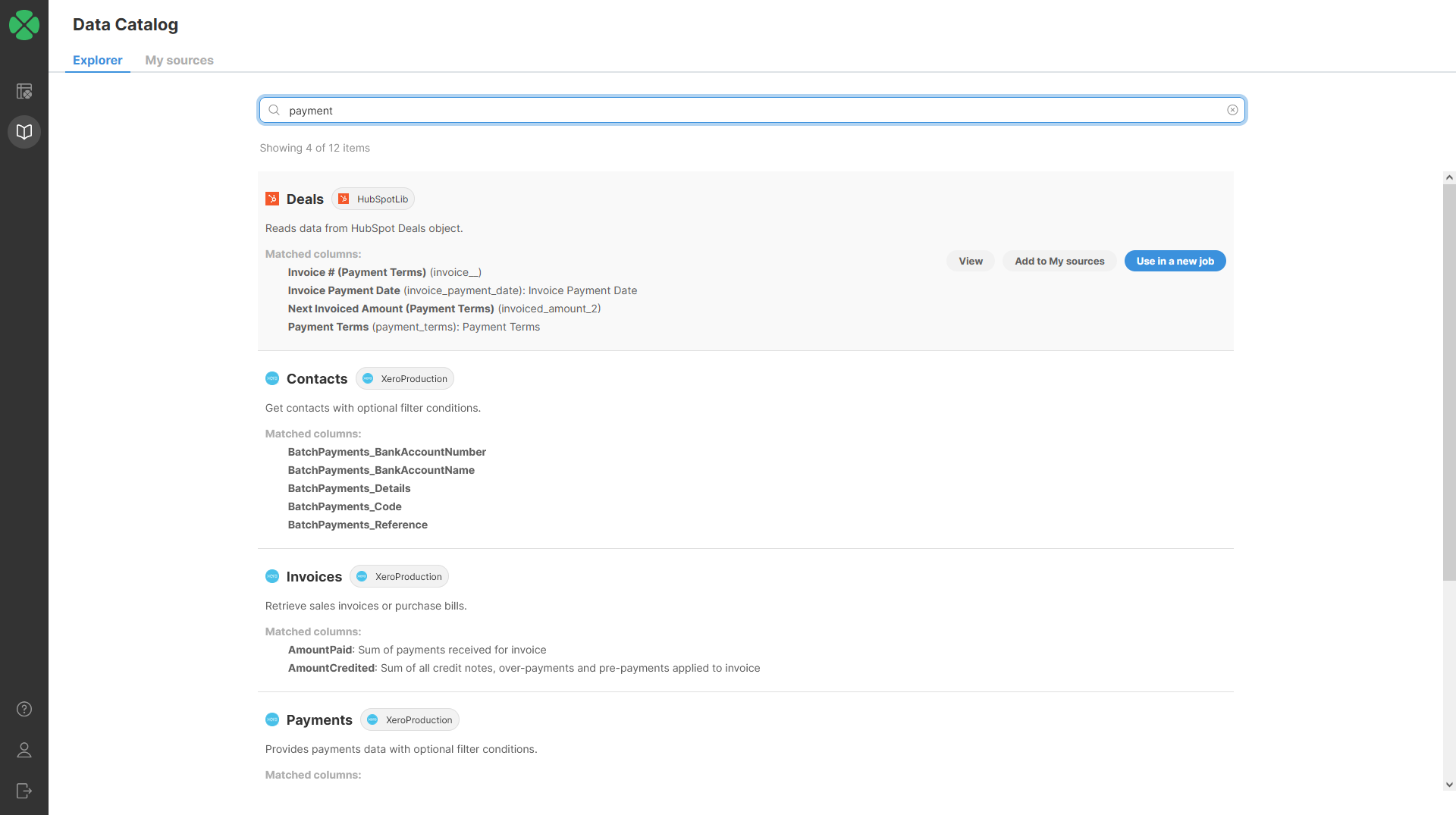
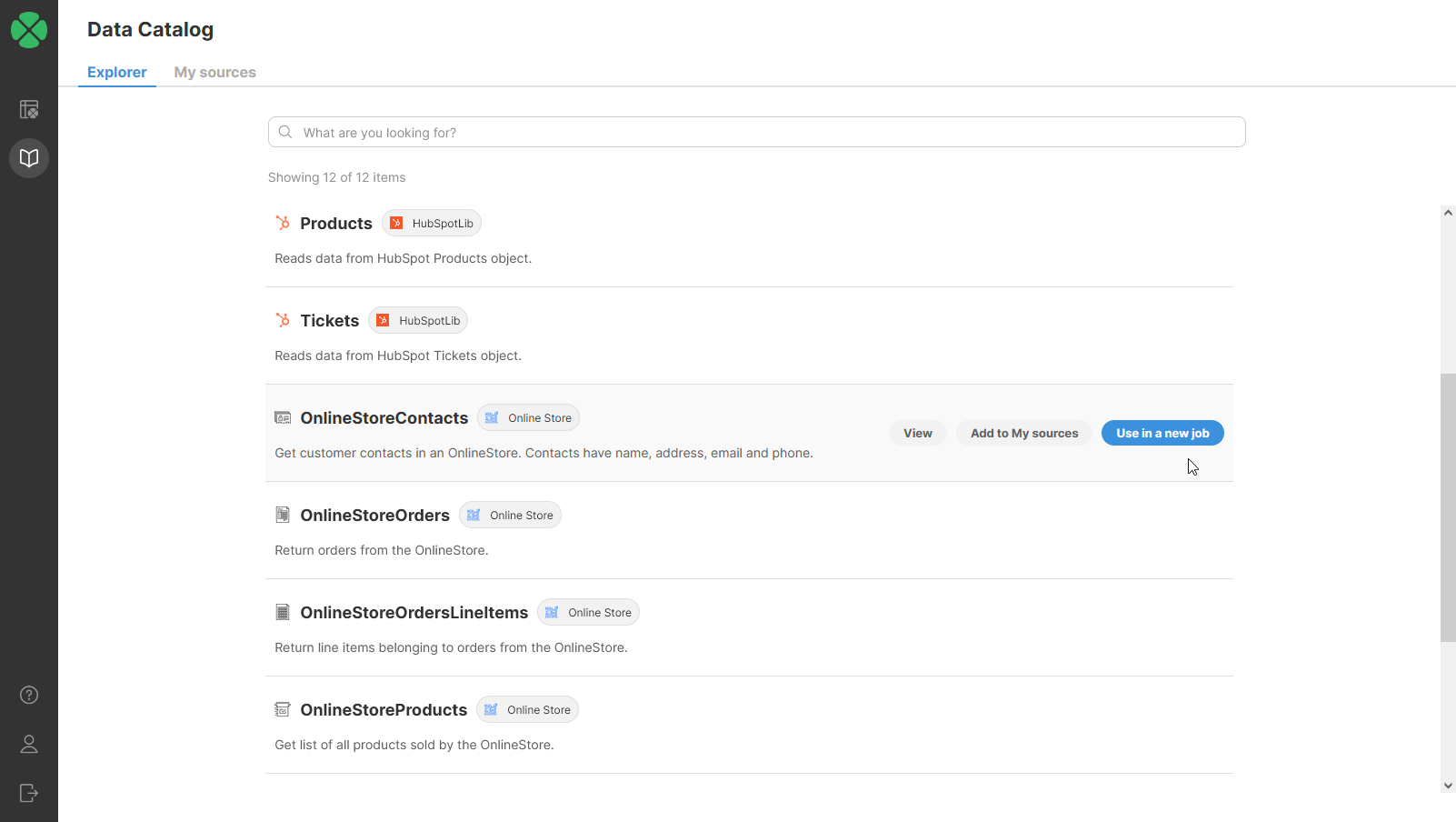
Search results in the CloverDX Data Catalog
Provide tools for your users
Data on its own is not very useful without the tools to work with it, and the right balance means supporting some specialized tools teams already use, while standardizing on common tools for lighter-weight work, rather than letting everyone pick their own and creating a different kind of sprawl.
Making data useful to people also means publishing it in a common format that everyone can use, no matter what the tool or platform they’re working with.
How CloverDX helps provide self-service data
The CloverDX data management platform is built on automation. The more you can automate as much of your data workflow as possible, the faster you can get accurate data into the hands of people who need it.
CloverDX’s data democratization features are designed to bridge the gap between what the IT team creates and what business users need. Highly technical users can design, automate and operate complex data pipelines, and publish the results, in whatever format that’s needed, to the people or applications that need it, without those users needing to understand a complex tool or learn code.
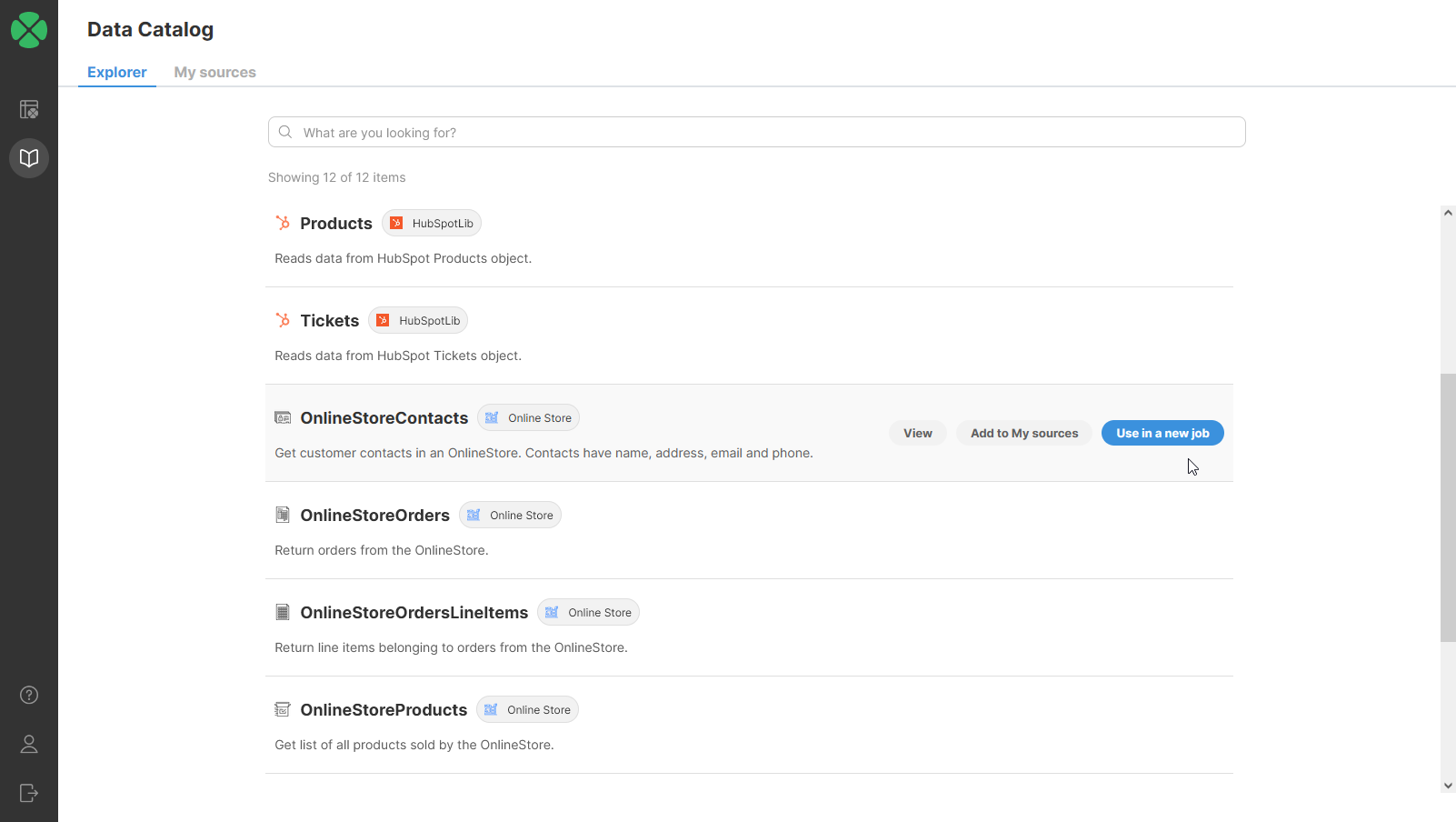
The CloverDX Data Catalog interface
The Data Catalog allows you to expose live data to users in a simple, searchable, understandable interface. As well as just publishing raw data as stored in a database, you can also attach business logic to it in a CloverDX workflow so you can create new datasets for users to access. Think, for example, of a dataset of sales employees by revenue, created from tables in the accounting system and CRM.
The ability to incorporate business logic also allows you to make sure data is clean, prepared and ready for use, saving time and increasing productivity of your users.
Some of the benefits of using the CloverDX Data Catalog to make prepared data available to users include:
- Saving time: No need for users to waste time filtering the entire dataset to show just the value or date ranges they need (especially useful when you’re preparing a report every month, week, or day).
- Reducing errors: No chance of human error when preparing data, e.g. selecting the right list of countries for an EMEA report.
- Standardized definitions: Everyone in the organization can access the ‘Active Users’ report, for example, without everyone using their own definition of what ‘Active’ really means.
- Live data, every time: Because the data is direct from the source, reports are always up-to-date, every time you click ‘run’.
- Better quality data, across the business: When everyone is using the same datasets, it’s easier for someone to spot a mistake or opportunity for improvement and work with IT to fix it at source, so other users going forward are now using the corrected data.
Data democratization is enabling organizations to unlock the full potential of their data and foster collaboration in the process, providing users from both IT and business teams the ability to find, explore, and analyze data without sacrificing quality. CloverDX helps break through data silos and give all users, regardless of their technical ability, access to data sources that they can search, explore and work with.
Final thoughts: Definition is the starting point, not the destination
Data democratization succeeds or fails on the details of how you implement it, not just the ambition behind it. Getting the definition right, and understanding how governance, literacy, and now AI-driven discovery all fit together, is the foundation. What you build on top of that foundation is where the real work happens.
The organizations that get this right tend to share a common pattern: they treat democratization as an ongoing practice with clear ownership, not a project with a finish line, and they invest as much in the people side, literacy, culture, trust, as they do in the tooling.
If you're ready to move from definition to practice, this guide to implementing data democratization picks up exactly where this one leaves off.
If you’re interested in learning more about how CloverDX can help your business achieve greater success through data democratization, request a demo and see how you can make data available more easily, while still keeping centralized control.

Share