CloverDX: A Boomi alternative with predictable pricing
Manage complex data pipelines. Add data and pipelines without changing your bill. See how CloverDX compares to Boomi.
Hundreds of data teams trust CloverDX
for managing enterprise data at scale:
Why choose CloverDX over Boomi?
Predictable billing that you can forecast and defend
Deployment flexibility on your terms. Run CloverDX on-prem, in cloud or hybrid, with no vendor-hosted platform in the middle.
Handle complex ETL and CDC natively, without the external scripting Boomi's low-code ceiling can force
In-house, personal support from experts

CloverDX vs Boomi at a glance
| Boomi | CloverDX | |
|---|---|---|
| Pricing model | Edition and connector-based subscription, plus usage-based options (pay-as-you-go messages, credits for Data Integration) | Capacity-based (server cores and seats) - predictable as data grows |
| Complex transformations | Strong for application integration; complex ETL can need scripting or add-ons | Built for heavy, complex data work and can handle complicated pipelines |
| Deployment flexibility | iPaaS: cloud-hosted platform, with local runtimes you manage | Self-hosted: on-premise, your cloud or hybrid. No vendor in the data path. |
| Support model | Tiered vendor support | Direct access to in-house engineers; PS hours included |
| Cost predictability | Low - costs scale with usage | High - fixed costs regardless of data volumes |
| AI pricing model | Per-message fees on top of your model provider costs | BYOK/BYOM, licensed per user, no usage-based charges. CloverDX meters nothing and takes no cut of tokens |
| Version control | Component history in the platform, with Git available through CI/CD and the API | Your work saves as regular files, so it works with Git out of the box |
| Vendor lock-in | High - Migration away requires significant rebuild effort | Low - Open standards (XML project files, Java, standard protocols). CloverDX has no hosted control |
| Ownership | PE-owned since 2021 | Independently owned |
Why CloverDX stands apart from Boomi
Predictable pricing
Boomi prices by edition and connectors, with pay-as-you-go and credit options layered on. CloverDX prices by capacity (DX Units), so the bill does not move because your data grew.
No low-code ceiling
Boomi's core platform is built for straightforward integration work. Once transformation logic gets serious, heavy aggregation, CDC, or performance-critical pipelines, it can hit a ceiling that pushes teams toward external scripting, or toward Boomi Data Integration (formerly Rivery), which is priced separately on credits. CloverDX handles complex ETL, aggregations and CDC natively in one platform, with the choice to code when precision matters and use visual tools when speed does.
Deploy on your terms
Boomi is cloud-native by design, which works well if your infrastructure is entirely cloud-based, but is a real constraint for teams under data residency or compliance requirements. CloverDX supports on-premise, cloud and hybrid deployment with full container support, so regulated industries aren't forced into a cloud-only architecture.
Errors don't stop the whole job
Boomi handles errors at document level with Try/Catch. CloverDX adds record-level error routing and step-through debugging, so one bad record doesn't hold up the rest of the load.
Support and ownership
Boomi support runs through a tiered queue, and Boomi has been PE-owned since 2021.
CloverDX is independently owned, with no PE-driven pressure on pricing strategy.
CloverDX subscriptions include direct access to CloverDX experts and professional services hours from day one.
AI on your own terms
Boomi's AI agents support bringing your own model, but Boomi's own usage is metered, with a per-message fee on top of whatever you already pay your model provider.
CloverDX AI is bring-your-own-provider. You connect your own AI provider, pay them directly, and CloverDX meters nothing and takes no cut of tokens, and with BYOM your data never leaves your own environment.
Built for complex enterprise data requirements
Migrating off a platform
you've outgrown
Moving from Boomi's proprietary runtime doesn't mean starting from scratch. CloverDX's repeatable migration framework handles complex, large-scale data migrations, cloud, on-premise or hybrid, without re-engineering everything by hand.

High-volume batch ETL Boomi wasn't built for
Where Boomi's low-code model reaches its ceiling, CloverDX handles heavy aggregation, CDC and performance-critical pipelines natively, with record-level error handling that keeps one bad row from stopping an entire run.

Regulated data that can't leave your infrastructure
For finance, healthcare and government teams working under data residency requirements, CloverDX's on-premise and hybrid deployment keeps sensitive data inside infrastructure you control, no mandatory routing through a vendor's cloud.

Business users and engineering, in the same pipeline
CloverDX lets business experts review, correct and approve data using Wrangler Assistant and other self-service tools, inside pipelines engineering still owns and controls.
Complete Guide to Boomi Alternatives
Comparing Boomi competitors? Our guide looks at several of the top competitors, to help you find the best fit for your organization's data integration and ETL needs.
Case studies
How Zywave Used CloverDX to Take Engineers Out of the Onboarding Bottleneck
Zywave's customer data onboarding relied on hand-coded, one-to-one integrations that weren't monitored or controlled by IT, the kind of workaround a low-code ceiling can push teams toward. CloverDX replaced the final steps of that process with automated, IT-owned workflows engineers can trust to run themselves.
Result: Customer data onboarding time down at least 20%
"One-to-one integrations between applications aren't feasible for us. It's not monitored, and if something happens it's not controlled by the IT team. So one of my goals is to make sure that CloverDX is in the middle of all those integrations."
— Bryan Kahlig, Senior Director, Product Development, Zywave
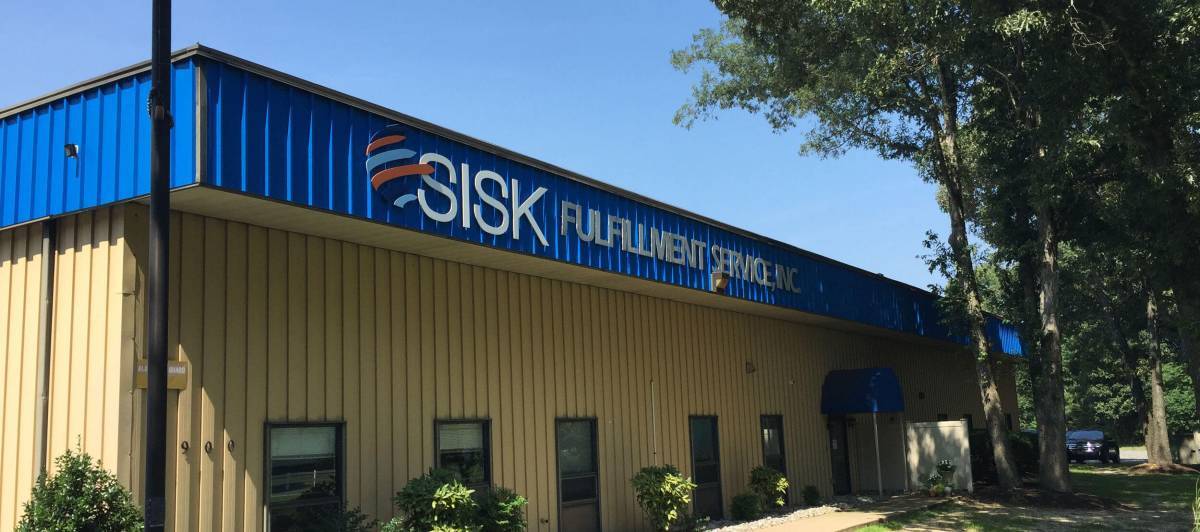
How Sisk Fulfillment Service Used CloverDX to Stop Errors Before They Cost a Shipment
Sisk processes around 4.5 million shipments a year for dozens of clients, and used to lose hours to manual file processing and a support queue that took weeks to answer a ticket. CloverDX's automated error handling catches and corrects problems without stopping the job, backed by direct access to CloverDX's own engineers rather than a tiered queue.
Result: 4.5 million shipments processed a year, zero late nights required
"Companies will always tell you they have great support, and then you buy the software and find out that's not the case, you put in a ticket and it takes three weeks to get an answer. With CloverDX I get answers right away."
— Nick Liles, IT Manager, Sisk Fulfillment Service
Already using Boomi?
Switching platforms is real work, and we won't pretend otherwise. Existing Boomi processes, connectors and orchestration logic don't transfer automatically, since Boomi's jobs and mappings are built inside a proprietary runtime. What CloverDX can do is make the move manageable: a repeatable migration framework, professional services hours included from day one, and the option to run CloverDX alongside Boomi in parallel while you test and cut over at your own pace, not on a vendor's timeline.
Request a technical demo
You've either hit Boomi's limits or you're starting to wonder if you will...
Get in touch and we'll show you how CloverDX compares.
CloverDX vs Boomi FAQs
iPaaS platforms like Boomi are built for application connectivity, syncing SaaS tools and triggering event-driven workflows. ETL platforms are built for transforming data at scale, cleaning, restructuring and moving large volumes with precision. CloverDX is purpose-built for the ETL/ELT use case.
CloverDX is built for complex transformations: record-level logic, joins, validation and error routing, with the option to add code where you want it. Boomi is strong for application connectivity and standard mappings, but heavy transformation logic often moves into custom scripts, which are harder to test and maintain at scale.
CloverDX is licensed by capacity, not usage. You buy DX Units, which convert into production Server cores or Designer seats, so your bill doesn’t change because your data volumes grew. Boomi is priced by edition and connector count, with pay-as-you-go and credit-based options layered on top, so costs can rise as you add connectors, volume or products such as Boomi Data Integration. Ask for your current Boomi order form and compare it to a fixed DX Unit quote.
CloverDX is self-hosted, so your pipelines, metadata and data stay on infrastructure you control, with no vendor-hosted platform in the middle. Boomi processes are built and managed in Boomi’s cloud platform and stored in its own format, so moving away means rebuilding them. CloverDX also works with open standards and native Git, so your work stays portable.
CloverDX runs entirely on your infrastructure: on-premises, in your own cloud or hybrid. There is no vendor-hosted platform or control plane in the data path, so you keep full control over where data, metadata and logs live. Boomi can run runtimes locally, but design, management and metadata sit in Boomi’s cloud, which some regulated teams need to review as part of their risk assessment.
It means you're talking to the people who build the platform when something breaks, engineers who can diagnose problems directly, rather than a tiered support queue.
It depends on the number and complexity of existing integrations. CloverDX's migration framework and included professional services hours are built to make the timeline predictable rather than open-ended. Get in touch for an estimate based on your setup.
Yes. Most teams migrate in stages, running CloverDX and Boomi in parallel while pipelines are tested and cut over, rather than switching everything at once.